

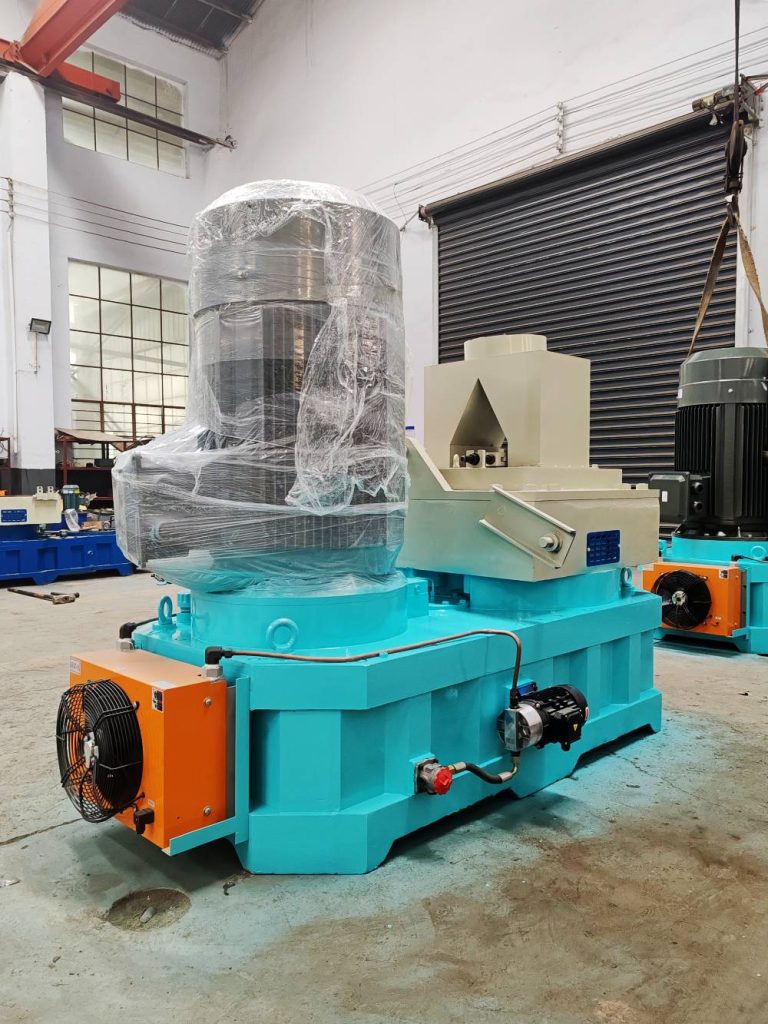
As a flagship of environmental protection equipment, the wood pellet mill has won widespread market recognition for its energy-saving and emission-reduction properties, and been widely adopted across China.
Against the backdrop of increasingly prominent environmental challenges, environmental protection has become an imperative task.
Accordingly, China is actively advocating the development of a green economy and driving the transformation of highly polluting enterprises.
As one of the major sources of pollutant emissions, power plants have naturally become a key focus of this transformation. Coal, the traditional fuel for thermal power plants, not only generates massive pollutant emissions but also exacerbates the pressure of resource consumption.
Thus, there is an urgent demand for biomass fuels that can replace coal. In recent years, the new energy pellet fuel produced by wood pellet mills has gradually emerged as the primary alternative to coal due to its high efficiency and eco-friendliness, and many power plants have also shifted to biomass power generation.
As the core equipment for pellet fuel production, the market demand for wood pellet mills has maintained a robust growth momentum. Manufacturers and individual operators across China have successively adopted wood pellet mills to process and produce biomass pellet fuel, forming a nationwide network of production lines. This equipment can not only compress powder materials into the required pellets but also crush lumpy dry materials into pellets, providing tremendous convenience for biomass fuel production.
Biomass pellet fuel is manufactured from agricultural and industrial waste such as crop straw, weeds and wood chips through processes including crushing and molding. This fuel boasts a long combustion time, odorlessness and high calorific value, with its calorific value after carbonization even reaching 1.5 times that of coal. Meanwhile, the ash residue from pellet fuel combustion is rich in potassium—a key organic nutrient—and can be used as organic fertilizer, realizing the circular utilization of resources.
A large number of manufacturers producing biomass pellet fuel with wood pellet mills are operating in the market, distributed all across China.
Through production with wood pellet mills, these manufacturers not only supply clean and high-efficiency energy to local areas but also make positive contributions to improving the atmospheric environment, reducing coal consumption and addressing winter heating needs.
In summary, as a representative of environmental protection equipment, the wood pellet mill has been widely recognized by the market for its advantages in energy conservation and emission reduction. With the continuous enhancement of environmental awareness and the development of the green economy, wood pellet mills and the biomass pellet fuel they produce will continue to play a pivotal role in the future and contribute to China’s sustainable development.